Integrating the Wildflowers Watercolor Set into Professional and Personal Creative Workflows
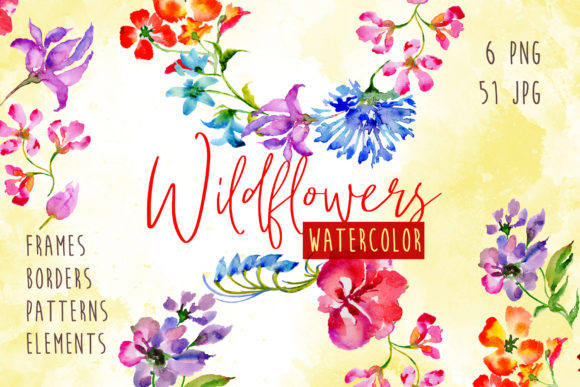
The intersection of traditional artistry and digital design has created a demand for high-quality, hand-painted assets that retain organic authenticity while offering modern versatility. The Wildflowers Watercolor Set represents a significant resource within this niche, providing creators with a comprehensive library of floral botanical elements. Unlike generic clip art, this collection emphasizes the nuanced texture and color variation inherent in genuine aquarelle painting. Comprising 57 distinct files, this asset pack serves as a bridge between analog aesthetics and digital production, suitable for a wide spectrum of users ranging from professional graphic designers and wedding stationers to educators, bloggers, and DIY enthusiasts.
Anatomical Breakdown of the Asset Collection
Understanding the technical composition of a digital art pack is essential for maximizing its utility. This specific wildflowers watercolor PNG set is structured to address different layers of design needs through two primary file formats. The distinction between these formats dictates how the elements should be deployed in various software environments.
Transparent PNG Elements for Layering
The core of the collection consists of 51 isolated PNG files. These are not merely cropped images; they are high-resolution scans at 300 DPI with transparent backgrounds. This transparency is critical for non-destructive editing. When designing a greeting card or a website header, these isolated botanical flowers can be layered over colored backgrounds, photographs, or textured paper without requiring manual masking or background removal. The 300 DPI resolution ensures that even when printed on large-format media like posters, the brushstrokes remain crisp and the color gradients smooth, avoiding the pixelation often associated with lower-quality digital florals.
High-Resolution JPG Patterns and Frames
Complementing the isolated elements are 6 JPG files sized at 3500x3500 pixels. These serve a fundamentally different purpose than the PNGs. Designed as frames, borders, and seamless patterns, these files provide immediate structural foundations for layouts. Because they are pre-composed at a large square dimension, they function effectively as backdrop textures for social media posts, certificate borders, or packaging wraps. While JPGs do not support transparency, their massive pixel dimensions allow for significant cropping and scaling while maintaining print-ready quality.
Applications in Event Stationery and Branding
One of the most prominent use cases for this wildflowers watercolor set is in the realm of event design, particularly weddings and corporate gatherings. The aesthetic of hand-painted wildflowers conveys a sense of organic elegance that rigid vector graphics often fail to achieve.
- Wedding Invitations: Designers can utilize the isolated PNGs to create custom corner arrangements or floral dividers. Because every image is a separate file, it is possible to mix and match stems, buds, and blooms to create unique compositions for save-the-dates, menu cards, and seating charts without repetition.
- Greeting Cards: For both commercial card makers and hobbyists, the set provides ready-to-use focal points. The aquarelle elements can be positioned centrally for a minimalist look or scattered for a meadow effect. The hand-painted nature adds tactile warmth to digital prints.
- Brand Identity: Businesses in the wellness, beauty, and sustainable goods sectors often require visual identities that reflect natural values. These botanical illustrations serve as excellent secondary brand assets for packaging labels, thank-you cards, and social media templates, reinforcing an organic brand narrative.
Digital Content Creation and Web Implementation
Beyond print, the Floral botanical flower assets are highly relevant for digital content creators. Bloggers, social media managers, and web designers face the constant challenge of sourcing imagery that feels bespoke rather than stock. This pack offers a solution for creating cohesive visual themes across digital platforms.
For blog headers and featured images, the 3500px pattern files can be used as subtle overlays. By reducing the opacity of a wildflower pattern behind text, creators can add depth and interest to a post without compromising readability. Similarly, the isolated PNGs are ideal for YouTube thumbnails, podcast cover art, and Instagram stories. The ability to edit size and colors allows these elements to adapt to specific platform dimensions and brand color palettes seamlessly. Unlike rasterized vectors, the watercolor texture retains its integrity even when resized, ensuring that digital presentations maintain a premium feel.
Educational and Research Visualization
A less discussed but equally valuable application lies in education and botanical research. Educators teaching biology, horticulture, or art history can leverage these detailed illustrations to enhance learning materials. While scientific illustration requires strict accuracy, watercolor representations offer an engaging alternative for general botany lessons, nature journaling workshops, or artistic anatomy studies.
The "highly detailed" nature of these illustrations means they capture petal veining, stem curvature, and color transitions accurately enough to serve as reference material for art students learning to paint flora. For researchers or writers publishing papers or articles on regional flora, these elements can soften the visual tone of academic documents, making dense information more accessible to broader audiences without sacrificing professionalism.
Technical Considerations for Editing and Production
To fully exploit the potential of this wildflowers watercolor set, users must understand the technical parameters of working with scanned traditional media. Although described as "fully editable," watercolor differs from vector art in how it responds to manipulation.
Color Adjustment Best Practices
Because these are raster images derived from physical paint, changing colors requires specific techniques. Simply applying a solid color overlay will destroy the luminous quality of the watercolor. Instead, professionals should use Hue/Saturation adjustment layers or Gradient Maps in software like Adobe Photoshop or Affinity Photo. This preserves the underlying texture and light interaction of the original paint while shifting the color spectrum to match a specific project requirement.
Scaling and Resolution Management
While the files are high resolution, they are not infinitely scalable like vectors. Users planning large-format prints such as banners or wall murals should calculate the required PPI (pixels per inch) before finalizing layouts. At 300 DPI, the isolated elements are optimized for standard letterpress and offset printing sizes. For larger applications, utilizing the 3500px JPG patterns as tiling backgrounds is often more effective than stretching individual flower PNGs beyond their native resolution.
Layering and Blending Modes
The true power of aquarelle elements emerges through blending. When using the PNGs over colored backgrounds, experimenting with Multiply, Screen, or Overlay blend modes can integrate the flowers more naturally into the design. Multiply mode, for instance, allows the white paper texture to disappear digitally, making the paint appear as if it were applied directly to the background color. This technique is essential for achieving a realistic, handcrafted look in digital compositions.
The Value of Hand-Painted Authenticity in Digital Design
In an era dominated by AI-generated imagery and perfect geometric vectors, the imperfections of hand-painted wildflowers carry significant weight. Each brushstroke in this set contains variations in pigment density and water flow that algorithms struggle to replicate authentically. This human element resonates with audiences seeking connection and genuineness.
For business owners and creators, choosing assets like this Wildflowers watercolor set of 57 files is a strategic decision. It signals an appreciation for craftsmanship and detail. Whether used as a delicate border on a luxury product label or as a vibrant background for an inspirational quote, these elements bring a tangible softness to the digital space. The versatility of having both isolated components and pre-made patterns ensures that the investment serves multiple functions across seasons and projects.
Workflow Integration for Diverse User Groups
Different users will approach this pack with varying workflows. Understanding these distinctions helps in selecting the right tools and methods.
- Professional Designers: Will likely integrate these assets into master template libraries. Creating smart objects or symbols from the PNGs allows for rapid iteration across client projects while maintaining non-destructive editability.
- DIY Crafters: May prefer user-friendly platforms like Canva or Procreate. The transparent PNGs upload directly to these platforms, allowing drag-and-drop functionality for homemade invitations or scrapbooking without needing advanced photo editing skills.
- Educators and Researchers: Can incorporate these visuals into presentation slides or handouts. The clean backgrounds of the PNGs make them easy to place next to text blocks or diagrams without creating visual clutter.
- Print-on-Demand Sellers: Can use the patterns and isolated flowers to create surface pattern designs for textiles, mugs, or phone cases. The 300 DPI specification meets the minimum requirements for most POD fulfillment centers.
Ultimately, the efficacy of any digital art asset depends on how well it aligns with the creator's intent. This collection provides the raw materials for expression, but the final outcome relies on the user's understanding of composition, color theory, and technical execution. By respecting the medium's origins and leveraging modern editing capabilities, users can transform these static files into dynamic, living designs that communicate beauty and intention across any medium.