The Strategic Advantage of Vector Wedding Invitations in Modern Event Design
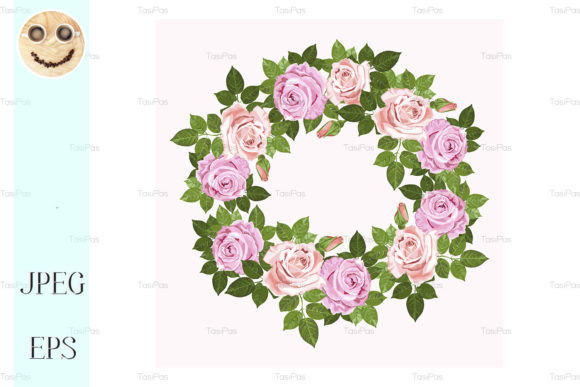
In the evolving landscape of event planning and graphic design, the technical foundation of visual assets often dictates the success of the final product. While aesthetic appeal is paramount, the underlying file architecture determines versatility, print quality, and long-term utility. Vector wedding invitations represent a critical intersection of artistic expression and technical precision, offering distinct advantages over traditional raster-based imagery. Specifically, designs featuring organic elements like pink and beige roses wreaths on white backgrounds demonstrate how vector technology can maintain the delicate nuance of floral illustration while providing the scalability required for professional printing and digital adaptation.
Technical Superiority of Vector Architecture
To understand the value proposition of vector-based stationery, one must distinguish between pixel-dependent images and mathematical path rendering. Standard JPEG or PNG files rely on a fixed grid of colored pixels. When enlarged, these pixels become visible, resulting in jagged edges and loss of clarity. In contrast, vector graphics utilize mathematical equations to define lines, curves, and shapes. This fundamental difference means that a vector wedding invitation can be scaled from the size of a postage stamp to a large-format welcome sign without any degradation in quality.
This resolution independence is particularly vital for intricate floral designs. A wreath composed of pink and beige roses contains numerous overlapping petals, subtle gradients, and fine stem details. In a raster format, these details are static. In an Encapsulated PostScript (EPS) vector format, every petal remains a distinct, editable object. For designers and DIY enthusiasts alike, this ensures that text remains crisp against complex backgrounds and that decorative borders retain their sharpness regardless of the output medium. The inclusion of high-resolution JPEG files alongside EPS sources in download packages serves a dual purpose: the JPEG provides immediate visual reference and compatibility with basic software, while the EPS preserves the master quality for professional production.
Color Accuracy and Print Consistency
Wedding stationery demands exacting color standards. The specific interplay of soft pinks and warm beiges in a rose wreath design must remain consistent across save-the-date cards, formal invitations, menus, and thank-you notes. Vector files facilitate superior color management. Because colors in vector formats are often defined by specific values rather than baked-in pixel data, they respond more predictably to CMYK conversion for offset printing. This reduces the risk of muddy colors or unexpected shifts when moving from screen to paper. Furthermore, the clean white background typical of these floral designs acts as a neutral canvas, ensuring that the paper stock’s texture and tone contribute positively to the final aesthetic without interference from digital artifacts.
Customization Workflows for Diverse Users
The accessibility of original downloaded files delivered without watermarks, design placeholders, or locked text layers transforms a static template into a dynamic creative asset. This level of access supports various user groups, from professional graphic designers streamlining client work to couples managing their own event branding.
- Professional Designers: For agencies and freelancers, vector wedding invitations serve as foundational assets that reduce billable hours. Instead of illustrating a botanical wreath from scratch, a designer can import the EPS file, ungroup the elements, and modify the composition to fit unique layout requirements. The ability to recolor specific flower elements allows for rapid iteration across different client brand palettes while maintaining structural integrity.
- DIY Couples and Hobbyists: Users with intermediate skills in software like Adobe Illustrator or Affinity Designer can leverage these files to create bespoke stationery at a fraction of custom design costs. The separation of design and text layers means users can replace placeholder typography with their specific event details without accidentally altering the floral artwork. This modularity is essential for personalization.
- Educators and Researchers: In academic or instructional settings, vector floral designs provide excellent case studies in digital illustration techniques. The layered structure of a rose wreath demonstrates principles of grouping, pathfinding, and gradient application. Educators can deconstruct the EPS file to teach students how complex organic shapes are built from simple geometric primitives.
- Business Owners and Marketers: Beyond weddings, businesses in the beauty, wellness, and lifestyle sectors utilize these versatile floral vectors for seasonal marketing. The elegant neutrality of pink and beige roses suits Mother’s Day promotions, spring sales, or corporate greeting cards. The vector format ensures these assets look equally professional on social media graphics and physical packaging.
Navigating File Formats and Deliverables
Understanding the contents of a ZIP delivery package is crucial for maximizing utility. A standard professional download typically includes both High-Resolution JPEG and EPS files. The JPEG serves as a proofing tool and a fallback for users lacking vector editing capabilities. However, the EPS is the primary working file. It is important to note that true vector EPS files should not contain embedded raster images unless necessary for specific texture effects. When evaluating vector wedding invitations, users should verify that the floral elements are genuine paths. This ensures that the "design and text" mentioned in deliverable descriptions are fully separable, allowing for complete creative control without residual watermarking or licensing restrictions hindering commercial or personal use.
Aesthetic Versatility of Botanical Wreath Designs
The specific motif of pink and beige roses arranged in a wreath on a white background occupies a unique niche in event design semantics. Unlike bold, high-contrast graphics, this palette relies on tonal subtlety and negative space. The white background is not merely empty; it is an active design element that enhances readability and conveys a sense of modern cleanliness. This makes the design inherently adaptable.
For formal evening weddings, the wreath can be centered with classic serif typography to evoke tradition. For rustic or garden events, the same vector elements can be repositioned to corner placements, opening up the center for handwritten-style fonts. The beige tones ground the design, preventing the pink from appearing overly saccharine, which broadens its appeal across different demographics and style preferences. This balance is difficult to achieve in raster art where blending modes are permanent, but in vector form, opacity and blend modes remain adjustable, allowing the user to tune the visual weight of the wreath to match the paper color or envelope lining.
Practical Considerations for Implementation
While vector files offer immense flexibility, they require appropriate software and knowledge to utilize effectively. Users must ensure they have access to vector editing applications. Free alternatives like Inkscape can open EPS files, though some complex gradients or mesh fills may render differently than in industry-standard software like Adobe Illustrator. Before committing to a print run, it is advisable to test the file in the intended software environment to confirm layer organization.
Additionally, typography pairing requires careful consideration. Since the downloaded files arrive without finalized text, the user assumes responsibility for font selection. The delicate nature of pink and beige rose vectors pairs best with typefaces that share similar optical weights. Overly heavy block letters can overwhelm the botanical illustration, while extremely thin hairlines may disappear during printing. Testing various font combinations within the vector environment allows for real-time assessment of hierarchy and balance.
Long-Term Value and Asset Management
Investing in high-quality vector wedding invitations extends beyond a single event. These assets possess longevity that raster templates lack. A well-crafted rose wreath vector can be archived and repurposed for anniversaries, baby showers, or other milestone celebrations years later. Because the file is resolution-independent, it remains future-proof against changing display technologies and print standards. As screens achieve higher pixel densities and printers offer finer dot pitches, vector assets automatically benefit from these advancements without requiring regeneration.
From a business perspective, building a library of licensed vector florals creates a sustainable resource ecosystem. Rather than purchasing new single-use templates for every project, creators can mix and match vector components to generate novel compositions. The pink and beige rose wreath, for instance, can be combined with other vector foliage, geometric frames, or watercolor textures (used as clipping masks) to create entirely new designs. This modular approach to design asset management maximizes return on investment and fosters creative experimentation.
Ultimately, the choice to utilize vector wedding invitations reflects a commitment to quality and adaptability. Whether for a professional designer meeting tight deadlines, a couple seeking personalized elegance, or an educator demonstrating digital art principles, the technical and aesthetic benefits of scalable vector graphics provide a robust foundation. The combination of high-resolution accessibility and editable source files ensures that the beauty of botanical design is preserved in its purest form, ready to be adapted to the specific needs of any user or occasion.