Doodle Flowers and Hand Drawing: Versatile Black and White Assets for Creative Projects
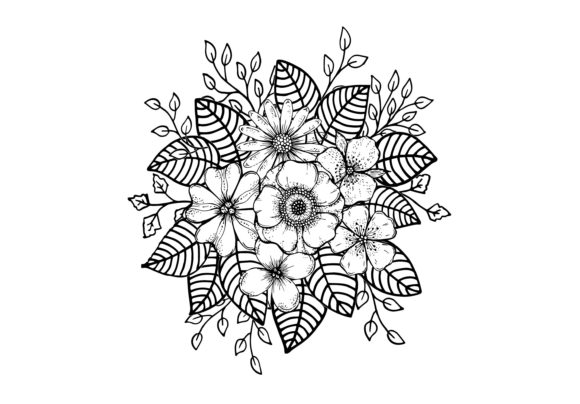
There is a distinct charm to black and white floral illustrations that digital filters simply cannot replicate. When we talk about Doodle Flowers, Hand Drawing, we are referring to organic, imperfect, and deeply human line work that brings warmth to any visual medium. Unlike rigid stock photography or overly polished vector art, hand-drawn doodle florals carry the personality of the artist’s pen stroke. For designers, educators, and hobbyists alike, these assets serve as a bridge between professional graphic design and authentic artistic expression. The beauty lies in their simplicity; stripped of color, the focus shifts entirely to form, composition, and the rhythmic flow of lines.
The Therapeutic Power of Doodle Floral Patterns in Coloring Books
One of the most significant real-world applications for hand-drawn floral patterns is in the creation of coloring books for both children and adults. This isn't just about filling pages with pretty pictures; it is about providing a structured yet open-ended canvas for mindfulness. When creating or selecting doodle flowers for this purpose, the line weight and complexity matter immensely.
For adult coloring enthusiasts, intricate doodle floral patterns offer a meditative escape. The repetitive nature of drawing petals, leaves, and vines engages the brain in a state of flow, reducing anxiety and promoting relaxation. From a production standpoint, if you are designing these books, ensure your vectors have closed paths. This prevents ink bleed issues during printing and makes digital coloring apps function correctly. Adults often prefer higher detail density, so layering smaller doodle elements within larger flower outlines creates that satisfying "magic garden" effect without becoming overwhelming.
Conversely, designs for children require bolder strokes and more negative space. A hand-drawn aesthetic works beautifully here because it feels approachable rather than intimidating. Children respond well to whimsical, slightly exaggerated proportions found in doodle art. Using black and white vectors allows parents and teachers to print unlimited copies at home without worrying about expensive color ink, making it a practical resource for classrooms and rainy-day activities.
Elevating Ceremony Stationery with Organic Line Work
Weddings, memorials, and milestone celebrations demand stationery that feels personal. Mass-produced floral borders can sometimes feel sterile, whereas Doodle Flowers, Hand Drawing styles introduce an intimate, bespoke quality to greeting cards and invitations. In the wedding industry, there is a growing trend toward "imperfect perfection," where couples want their paper goods to reflect genuine emotion rather than corporate polish.
Black and white floral vectors are exceptionally useful here because they act as a neutral foundation. A bride might choose a specific shade of sage green for her bridesmaids' dresses, but she wants her invitations to remain timeless. A monochrome doodle border accommodates this perfectly, allowing typography and paper texture to take center stage. Because these are vector jobs, you can effortlessly scale a small corner flourish up to a full-page backdrop for a reception seating chart without losing crispness.
Consider the versatility across different ceremonies. A delicate, fine-line rose doodle suits a romantic anniversary card, while a bolder, wildflower-style pattern might be better suited for a baby shower or a rustic memorial service. The ability to mix and match individual hand-drawn elements allows designers to create custom arrangements that tell a specific story, rather than relying on generic clipart bundles.
Designing the Magic Garden: Composition and Flow
Creating a cohesive "flower carpet" or magic garden scene requires more than just scattering individual flower vectors onto a canvas. It demands an understanding of how hand-drawn elements interact. In a black and white palette, contrast is your primary tool for depth. Without color to separate foreground from background, you must rely on line thickness and density.
- Line Weight Hierarchy: Use thicker outer lines for main focal flowers and thinner, more delicate lines for filler foliage and background textures. This mimics natural light and shadow.
- Negative Space Management: In a dense magic garden pattern, leave intentional pockets of white space. These breathing rooms prevent the design from looking muddy when printed or colored.
- Organic Rhythm: Avoid perfect symmetry. Hand drawing is celebrated for its asymmetry. Rotate your vector elements slightly and vary their sizes to maintain that authentic doodle feel.
- Seamless Tiling: If creating a flower carpet for textile design or wrapping paper, ensure your doodle motifs overlap the canvas edges naturally. Test your repeat pattern in grayscale first to catch any jarring visual breaks.
This approach transforms isolated doodles into an immersive environment. Whether used as a website header background, a textile print, or a mural stencil, the magic garden concept relies on the cumulative effect of many small, hand-crafted details working in harmony.
Practical Considerations for Vector Doodle Assets
While the aesthetic of hand drawing is loose and free, the technical execution for commercial use requires precision. If you are sourcing or creating Doodle Flowers, Hand Drawing vectors for professional projects, there are several practical factors to keep in mind to ensure usability.
First, verify that the vectors are truly editable. Some "hand-drawn" assets are actually raster images traced automatically, resulting in jagged anchor points and unmanageable file sizes. Genuine vector doodles should have smooth curves and logical node placement. This matters significantly when you need to recolor the artwork or adjust the thickness of a stem to match your brand guidelines. A poorly constructed vector will fall apart under modification, defeating the purpose of using scalable graphics.
Secondly, consider the licensing and exclusivity. In the age of AI-generated imagery and saturated stock markets, unique hand-drawn assets hold premium value. If you are using these for client work, especially in branding or packaging, ensure you have the appropriate commercial rights. Clients often seek out hand-drawn florals specifically to differentiate themselves from competitors using the same popular stock packs. Curating a private library of original or licensed-exclusive doodle flowers can become a significant selling point for design services.
Finally, think about cross-media adaptability. A doodle flower that looks stunning on a high-resolution screen might disappear when embroidered on fabric or laser-cut into wood. Always test your black and white vectors at the intended physical size. Simplify details for manufacturing processes that cannot handle hairline strokes. The true strength of a versatile doodle asset is its ability to translate across mediums—from digital greeting cards to physical merchandise—while retaining its handcrafted soul.
Balancing Trend and Timelessness
Hand-drawn florals have seen surges in popularity, but the core appeal remains constant. Trends may dictate whether we prefer minimalist single-line drawings or maximalist botanical illustrations, but the desire for human connection through art endures. When integrating these elements into your work, focus on authenticity over novelty. A genuinely felt hand drawing, even if simple, will always resonate more deeply than a technically complex but soulless imitation. By treating each doodle flower as a collaborative element rather than mere decoration, you unlock its full potential to relax, inspire, and beautify the spaces it inhabits.